
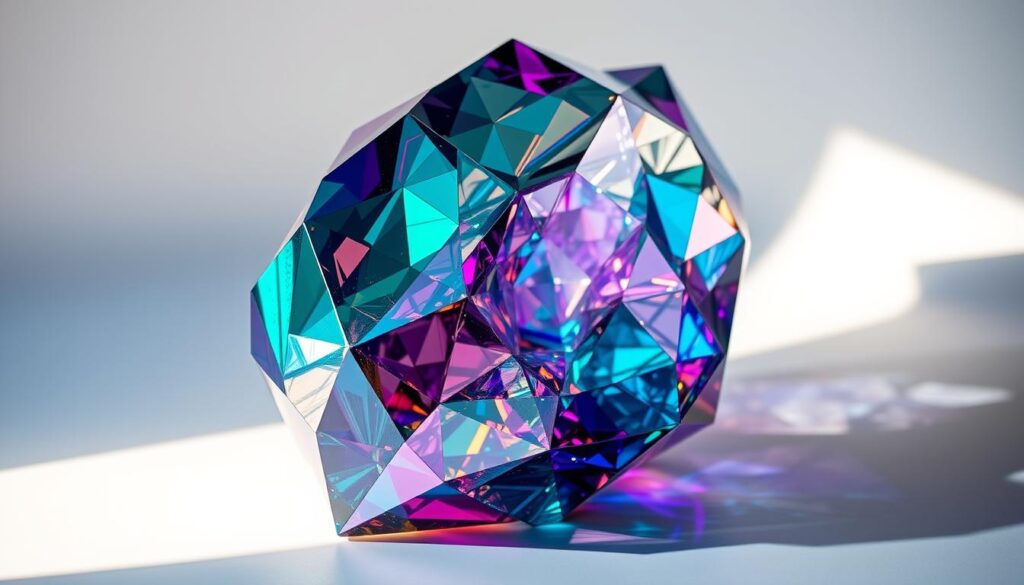
Dichroic glass possesses an array of unique properties that set it apart from other materials used to color glass. One of the most remarkable properties is its ability to reflect different colors depending on the angle from which it is viewed.
This phenomenon occurs when multiple layers of metal oxides are vaporized onto the glass surface, creating a stunning visual effect through the interaction with light. As a result, dichroic glass creates dynamic visual experiences, producing color-shifting properties that change depending on viewing angle and lighting conditions.
Understanding the science behind this mesmerizing material and the process of creating it is essential for artists who want to incorporate dichroic glass into their art projects. By exploring the unique properties of dichroic glass, you can unlock new creative possibilities.
Understanding Iridescent and Dichroic Glass
The world of glass artistry is enriched by iridescent and dichroic glass, each with its distinct production methods and aesthetic appeal. As you explore these materials, understanding their differences and characteristics will help you make the most of their unique qualities.
What Is Iridescent Glass?
Iridescent glass is created by spraying metallic salts onto hot glass, resulting in a subtle, pearlescent effect. This process involves applying a chemical coating, typically stannous chloride, at high temperatures, which leaves a colorful, shimmering finish. The effect is often more subdued compared to dichroic glass, making it suitable for larger decorative pieces where a nuanced visual impact is desired.
What Is Dichroic Glass?
Dichroic glass, on the other hand, is made using a high-tech process involving the vacuum deposition of multiple metallic layers. This complex process results in a glass that exhibits dramatic, bold color shifts across the spectrum. The colors in dichroic glass come from vaporized metals and quartz, creating a striking visual effect that is particularly prized in jewelry and statement pieces.
Key Differences Between Iridescent and Dichroic Glass
The primary differences between iridescent and dichroic glass lie in their manufacturing processes, visual impacts, and applications. Dichroic glass is more expensive due to its complex production process and is known for its bold color shifts. In contrast, iridescent glass offers a more subtle effect and is often used in larger decorative items. Understanding these key differences will help you choose the right material for your artistic projects.
The Science Behind the Shimmer
Iridescent and dichroic glass owe their stunning visual effects to the unique way they interact with light. This interaction is not just about aesthetics; it’s rooted in the physical properties of the glass and how it manipulates light to create its characteristic shimmer.
How Iridescent Coatings Work
Iridescent glass achieves its effect through a thin coating that refracts light, creating a spectrum of colors. This coating is typically applied using a process that involves depositing metallic oxides or other materials onto the glass surface.
The Thin-Film Technology of Dichroic Glass
Dichroic glass, on the other hand, utilizes thin-film technology to achieve its color-shifting properties. By layering materials of precise thickness, dichroic glass can reflect certain wavelengths of light while transmitting others, resulting in a dramatic change in appearance as the viewing angle changes.
Light Interaction and Color-Shifting Properties
The unique property of dichroic glass to simultaneously transmit and reflect light creates a dynamic visual experience. As you view the glass from different angles, the perceived colors shift, creating an engaging effect. For more insights into the historical significance of iridescence in glass art, you can explore our article on Reflecting Through Ages: Unveiling the Mystique of Iridescence in Historical Glass.
| Property | Iridescent Glass | Dichroic Glass |
|---|---|---|
| Method of Achieving Effect | Thin coating that refracts light | Thin-film technology layering materials |
| Visual Effect | Refracts light, creating a spectrum of colors | Reflects certain wavelengths, transmits others |
| Color Appearance | Changes with viewing angle | Changes with viewing angle, dual-color effect |

Essential Tools and Materials for Working with Iridescent and Dichroic Glass
The art of working with iridescent and dichroic glass requires a specific set of tools and materials to bring your creative vision to life. To achieve the desired effects and ensure a safe working environment, it’s crucial to understand the essential equipment and precautions needed.
Glass Types and Compatibility Considerations
When selecting glass for your project, consider the type and compatibility of the glass. Iridescent and dichroic glass can be fused with other glass types, but it’s essential to ensure that the coefficients of thermal expansion (COE) are compatible to prevent cracking or shattering. Always check the COE of the glass you’re working with to avoid potential issues.
Necessary Equipment for Cutting and Shaping
Cutting and shaping iridescent and dichroic glass require precision and the right tools. You’ll need a good quality glass cutter, running pliers, and breaking pliers. For more intricate cuts, consider using a glass grinder or a diamond blade saw. Proper technique and patience are key to achieving smooth, accurate cuts.
Kiln Requirements and Setup
A kiln is a critical piece of equipment for working with iridescent and dichroic glass, especially when fusing or slumping. Ensure your kiln is properly calibrated and maintained. The kiln should have accurate temperature control and be capable of reaching the necessary temperatures for your projects.
| Kiln Feature | Importance | Consideration |
|---|---|---|
| Temperature Control | High | Accurate temperature control is crucial for achieving the desired effects with iridescent and dichroic glass. |
| Kiln Wash | Medium | Applying kiln wash to the shelves can prevent glass from sticking. |
| Ventilation | High | Proper ventilation is necessary to remove fumes and particles. |
Safety Equipment and Precautions
Safety should always be your top priority when working with glass. Wear protective gear, including safety glasses, gloves, and a respirator mask when grinding or cutting glass. Be aware of the potential health hazards associated with the coatings on iridescent and dichroic glass, particularly when firing them in a kiln. Research the materials used in your glass to understand any potential risks.
By understanding the essential tools and materials needed for working with iridescent and dichroic glass, you can ensure a safe and successful creative process. Always follow safety guidelines and best practices to achieve the best results.
Techniques for Working with Iridescent and Dichroic Glass
The unique properties of iridescent and dichroic glass demand specialized techniques to bring out their beauty. When working with these materials, understanding the intricacies of each step in the process is crucial for achieving the desired outcome.
Cutting and Handling Tips
When cutting iridescent and dichroic glass, it’s essential to use the right tools to prevent damage. Use a glass cutter with a carbide wheel for clean cuts. Handling these glasses requires care, as the iridescent and dichroic coatings can be delicate. Always wear gloves to prevent oils from your skin from coming into contact with the glass.

Layering and Fusing Methods
Layering iridescent and dichroic glass requires consideration of the glass types used and their compatibility. For stained glass projects, ensure that the COE (coefficient of expansion) of the glasses is compatible to prevent cracking. When fusing, start with tack fusing at lower temperatures to test the compatibility and desired effect before proceeding to full fuse.
Slumping and Draping Techniques
For slumping and draping, it’s crucial to control the temperature carefully. Iridescent stained glass not designed for fusing should be limited to temperatures below 1200°F to preserve the iridescent coating. Monitor the glass closely as it slumps to achieve the desired shape without overheating.
Temperature Considerations and Firing Schedules
Temperature control is critical when working with dichroic glass. Aim for lower fusing temperatures: 1425-1450°F for tack fusing and 1450-1475°F for full fusing. Slow temperature ramps of 300°F per hour or less during heating and cooling phases help prevent thermal shock. The following table summarizes the recommended firing schedules:
| Fusing Method | Temperature (°F) | Temperature Ramp (°F/hour) |
|---|---|---|
| Tack Fusing | 1425-1450 | ≤300 |
| Full Fusing | 1450-1475 | ≤300 |
| Slumping (Iridescent Glass) | <1200 | ≤300 |
By mastering these techniques and understanding the specific requirements for iridescent and dichroic glass, you can create stunning pieces that showcase the beauty of these unique materials.
Creative Applications and Project Ideas
Dichroic glass is a dynamic material that can be used to create captivating art, from intricate jewelry to large-scale installations. As you explore the potential of dichroic glass, you’ll discover a multitude of exciting creative avenues.
Jewelry and Small Decorative Items
You can create stunning jewelry pieces and small decorative items using dichroic glass. The material’s iridescent shine and color-shifting properties make it ideal for crafting unique pendants, earrings, and other adornments.
Functional Art: Bowls, Plates, and Vessels
Dichroic glass can be used to create beautiful functional art pieces, such as bowls, plates, and vessels. These items not only serve a practical purpose but also add a touch of elegance to any setting.
Wall Art and Installations
Large-scale wall installations featuring dichroic glass can transform spaces by creating dynamic light effects that change throughout the day. You can design wall art panels that incorporate dichroic elements alongside complementary glass techniques to create multi-dimensional visual experiences.
Some ideas to consider include using standoffs to position the glass away from the wall, creating floating frames that permit backlighting, or incorporating dichroic glass into architectural installations like windows or room dividers. You can also experiment with combining dichroic glass with LED lighting systems to create controllable, dramatic lighting effects.
Conclusion
As we conclude our exploration of iridescent and dichroic glass, it’s clear that these materials have revolutionized the art world. The unique properties of dichroic glass have opened up new creative avenues for artists, allowing them to craft stunning pieces that interact with light in extraordinary ways.
Working with these specialized glasses requires an understanding of their technical requirements and artistic potential. By mastering the techniques and applications of iridescent and dichroic glass, artists can create dazzling masterpieces that captivate their audience. The investment in quality tools and knowledge pays dividends in the stunning results that can be achieved.
As one of the most dynamic areas in contemporary glass art, working with iridescent and dichroic glass continues to evolve. New techniques and applications are being developed by innovative artists around the world, ensuring that the art form remains vibrant and exciting. Whether you’re creating small jewelry pieces or large installations, the principles covered in this guide provide a foundation for exploring the endless possibilities of these captivating materials.