
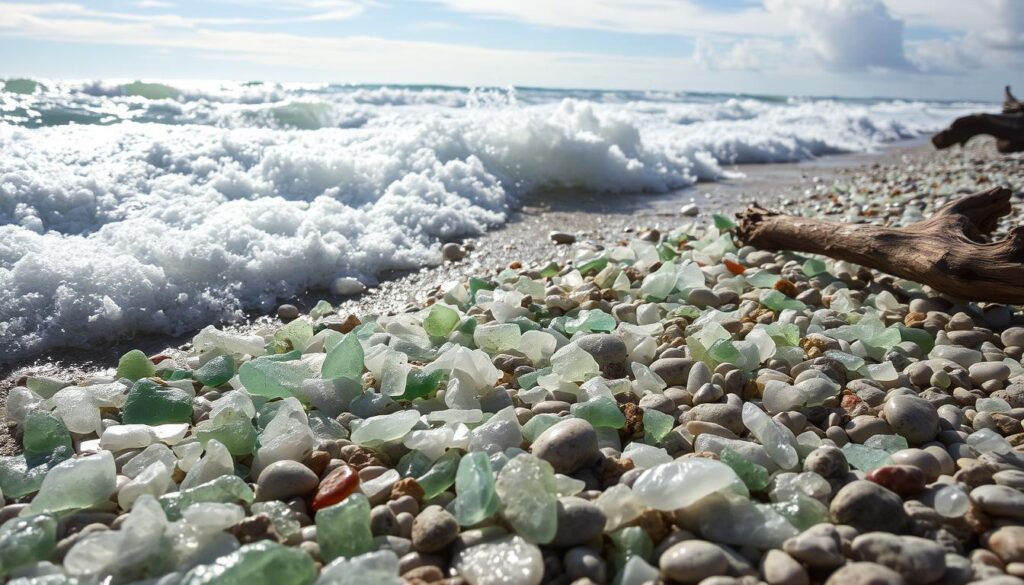
You’ve likely strolled along a beach and spotted a beautiful piece of sea glass, but have you ever wondered how it got there? Sea glass is formed through a natural process that transforms discarded glass into treasured collectibles.
As pieces of glass soak in salt water and get tossed against the sand by the waves for anywhere from 5 to 50 years, all the sharp edges and corners become smooth. The pieces of glass also take on a frosted look due to the way the sand etches the surface of the glass.
Many people enjoy collecting sea glass on beaches, and the colors and characteristics of the glass offer clues about their original source. For more information on related hobbies, you can visit our about page.
What Is Sea Glass?
You might have stumbled upon sea glass while beachcombing, but have you ever wondered what it is? Sea glass refers to naturally weathered glass fragments found on beaches along oceans, seas, and other saltwater bodies. These pieces of glass undergo both physical and chemical weathering through constant tumbling in saltwater, creating their characteristic frosted appearance and smooth edges.
Defining These Ocean Treasures
Sea glass begins as normal shards of broken glass that are then persistently tumbled and ground until the sharp edges are smoothed and rounded. In this process, the glass loses its slick surface but gains a frosted appearance over many years. Genuine sea glass originates from discarded glass items including bottles, tableware, windows, and even shipwrecks.
Sea Glass vs. Beach Glass: Understanding the Difference
While sea glass and beach glass are often used interchangeably, they have distinct differences. Unlike sea glass, which comes from saline water, beach glass comes from freshwater sources like lakes and rivers. The key difference lies in their texture and appearance – sea glass typically has a more frosted, weathered look due to the higher salinity and pH of ocean water.
| Characteristics | Sea Glass | Beach Glass |
|---|---|---|
| Origin | Saltwater bodies | Freshwater sources |
| Appearance | More frosted | Less frosted |
| pH Balance | Higher pH | Lower pH |
The History Behind Sea Glass: Where Does It Come From?
Understanding where sea glass comes from requires a journey through time, exploring human activities and their impact on our oceans. Sea glass starts out as trash glass from various sources like bottles, jars, glasses, plates, windows, windshields, or ceramics. The world’s oceans have unfortunately become a dumping ground for all sorts of trash, whether from ships or from those who live near the sea.
Human Origins of Sea Glass
Sea glass originates entirely from human-made glass products that have found their way into water bodies through various means. Historically, people have discarded glass items in numerous ways, contributing to the formation of sea glass. For instance, shipwrecks throughout maritime history have deposited countless glass items into the ocean, creating some of the oldest and most valuable sea glass specimens. Additionally, coastal factories and glass manufacturing plants often dumped waste glass directly into nearby waters, significantly contributing to sea glass formation.
- Discarded bottles, broken tableware, and household glass items are common sources of sea glass.
- Natural disasters like hurricanes and tsunamis have washed household items into the sea, creating another historical source of sea glass.
- The practice of using ocean dumping as waste disposal continued well into the mid-20th century before environmental regulations began to curtail it.
Historical Sources Through the Centuries
Throughout the 18th, 19th, and early 20th centuries, disposal of glass into oceans and waterways was a common practice, creating today’s supply of antique sea glass. Glass bottles from beverages, medicine, and household products represent the most common historical sources of sea glass found today. Some sea glass pieces can be traced to specific historical periods based on their color, thickness, and other characteristics. As you explore the world of sea glass, you’re essentially gathering fragments of human history that have been transformed by natural processes. For more information on the history of glass, you can visit Wikipedia’s History of Glass page.
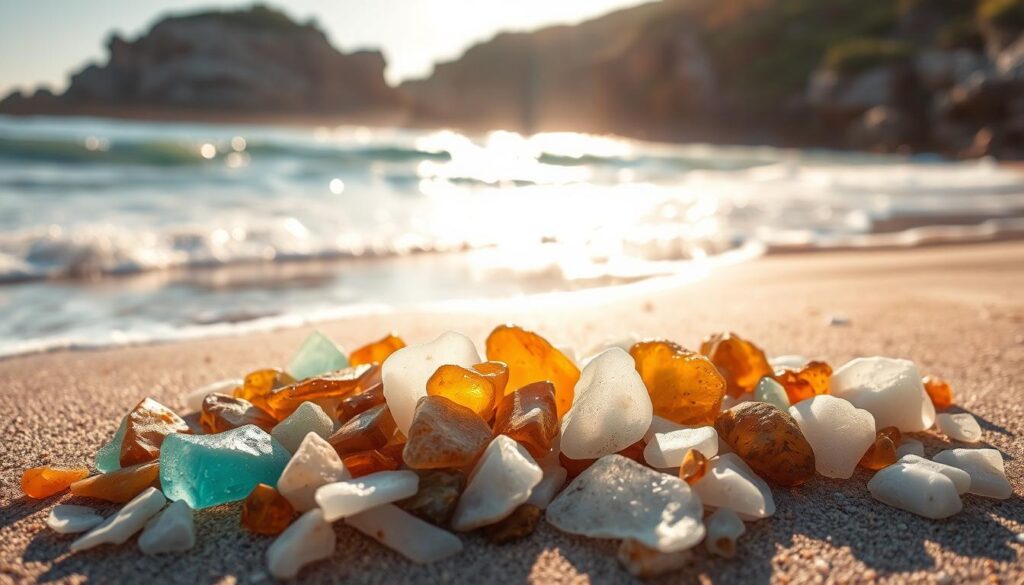
People collecting sea glass are not just finding beautiful, smoothed pieces of glass; they’re uncovering pieces of history. The historical sources of sea glass are diverse, ranging from discarded household items to remnants of shipwrecks. As you learn more about where sea glass comes from, you’ll appreciate the stories behind each piece you find.
The Natural Formation Process
As you explore the ocean’s treasures, you might wonder how sea glass comes to be. The transformation of discarded glass into sea glass is a complex process involving both physical and chemical changes that occur over many years.
How Trash Transforms into Treasure
The journey of glass from trash to treasure begins when it’s tossed into the ocean. Here, it’s subjected to the relentless action of waves, which gradually wear down its edges. The constant motion breaks larger pieces of glass into smaller fragments. Simultaneously, salt water initiates a chemical weathering process called hydration, slowly breaking down the glass surface at a molecular level.
Sand particles act as a natural abrasive, etching the glass surface and creating the characteristic frosted appearance that collectors prize. This multifaceted process transforms discarded pieces into smooth, frosted sea glass, giving them a unique, treasured quality.
The Timeline: How Long It Takes to Create Sea Glass
The time it takes for glass to transform into piece sea glass varies significantly. Factors such as water conditions, glass composition, and wave action all play a role in determining the transformation time. Generally, it takes anywhere from 20 to 40 years for sea glass to acquire its characteristic texture and shape, though some pieces may take as long as 100 to 200 years to fully mature.
As a piece of sea glass remains in the ocean, it becomes increasingly rounded and frosted. The most prized specimens show extensive weathering, a testament to their long journey. Each piece sea glass undergoes a unique transformation, resulting in one-of-a-kind specimens that are highly valued by collectors.
Colors of Sea Glass and Their Origins
The colors of sea glass are a window into the past, revealing the origins and history behind these ocean treasures. As you explore the world of sea glass, you’ll discover that the colors are not just visually appealing but also carry significant historical value. The diverse range of colors is a result of the various sources from which sea glass originates, including bottles, windows, and other glass objects.
Common Colors and Their Sources
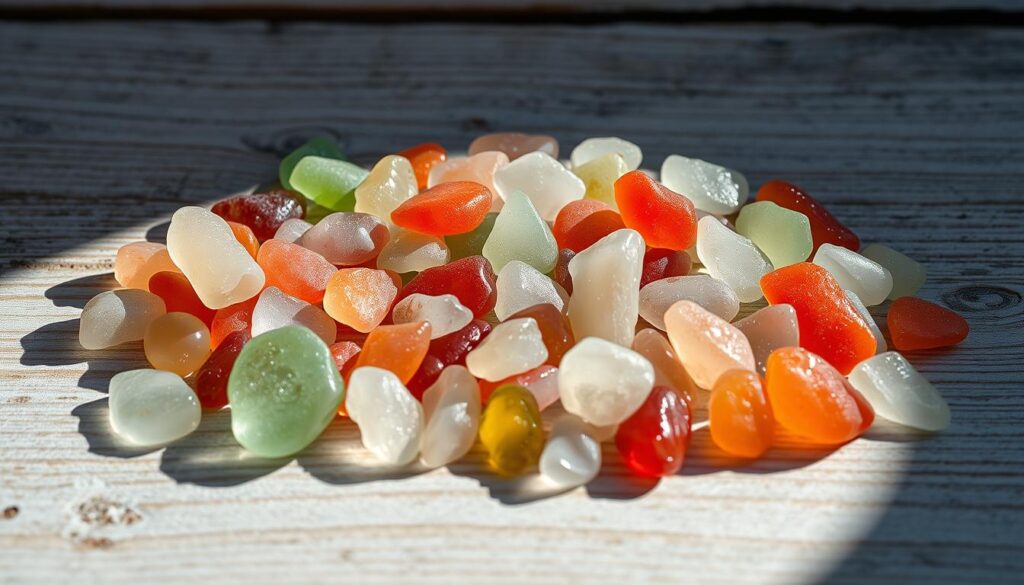
The most common colors of sea glass are kelly green, brown, white, and clear. These colors predominantly come from bottles used for beer, juices, and soft drinks, as well as fishing floats. Kelly green sea glass typically originates from beer bottles, while brown pieces often come from beer, whiskey, and medicine bottles from the 19th and 20th centuries. Clear or white sea glass derives from windows, tableware, and various bottles produced in large quantities throughout history. These common colors make up approximately 95% of all sea glass found.
Rare and Uncommon Sea Glass Colors
Less common colors of sea glass include jade, amber, and soft blue. Amber sea glass typically comes from early medicine bottles, whiskey containers, and laundry bleach bottles dating back to the early 20th century. Soft blue or aqua pieces often originate from vintage soda bottles, medicine containers, and Ball Mason jars from the late 19th and early 20th centuries. Uncommon colors like cobalt blue come from early Milk of Magnesia bottles, poison containers, and Vicks VapoRub jars, appearing in approximately 1 in 200 to 1 in 1,000 finds.
Extremely Rare Colors: The Ultimate Finds
Extremely rare colors of sea glass include red, orange, yellow, turquoise, black, and pink. Red sea glass, often from old Schlitz bottles, car tail lights, dinnerware, or nautical lights, is particularly coveted and appears in roughly 1 in 5,000 pieces. Orange sea glass is considered the ultimate prize, found once in about 10,000 pieces. These rare colors collectively represent less than 1% of all sea glass found, making them highly valuable to collectors.
The color of sea glass not only adds to its beauty but also provides a tangible link to the past, helping collectors date their finds and understand their historical context. As you continue to explore the world of sea glass, you’ll find that the colors and their origins are a fascinating aspect of this hobby.
Where to Find Sea Glass Around the World
The thrill of the hunt for sea glass takes you to numerous beaches worldwide, each with its own unique history and treasures. Whether you’re a seasoned collector or just starting out, the search for sea glass can be a rewarding adventure.
Famous Sea Glass Beaches
Some of the most renowned locations for finding sea glass include Glass Beach in Fort Bragg, California, and Seaham Beach in England, known for its rare multi-colored glass. The northeastern United States coastline, particularly in Maine and Massachusetts, is also a rich hunting ground due to centuries of maritime activity. You can also find sea glass on beaches in Puerto Rico, Italy, and Australia.
Why Sea Glass Is Becoming Harder to Find
Sea glass is becoming increasingly scarce due to several factors, including the shift from glass to plastic packaging and stricter littering laws. As more people search for sea glass, popular beaches are being thoroughly searched, making it harder to find new specimens. Environmental changes also affect the natural tumbling processes and deposition patterns of glass found on beaches.
Conclusion
The beauty of sea glass is a reflection of the intricate dance between human activity and the natural world. As you’ve discovered, sea glass takes 20-40 years, and sometimes as much as 100-200 years, to acquire its characteristic texture and shape. The varied colors of sea glass provide a window into our manufacturing history.
Each piece of sea glass is unique, telling a story of its origins and transformation. As plastic replaces glass in packaging, genuine sea glass becomes increasingly rare and valuable. You can appreciate these ocean gems for their aesthetic qualities and historical significance.