
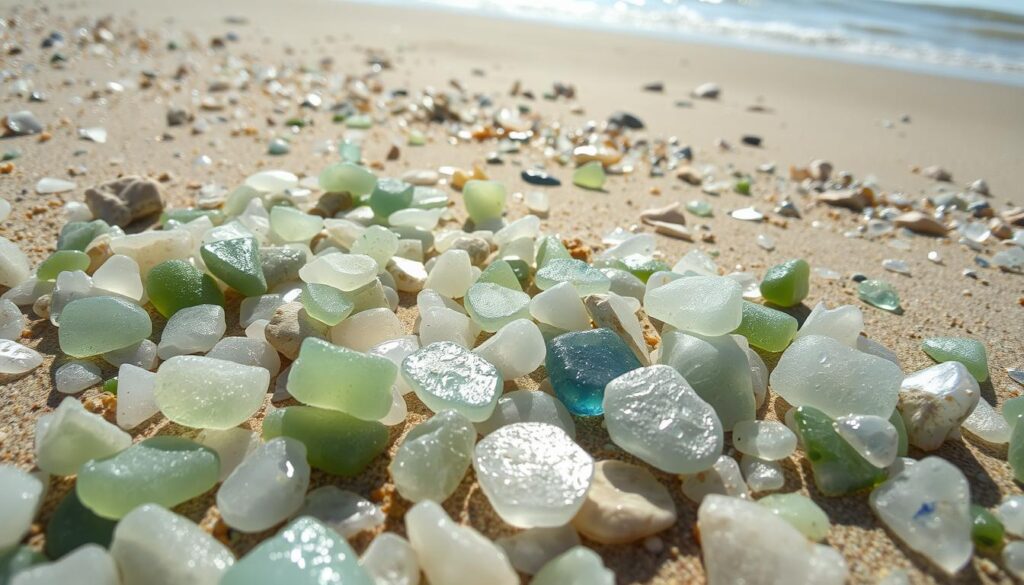
As you stroll along the beach, you may stumble upon tiny treasures that have been smoothed by the relentless sea waves. These pieces of sea glass hold stories of their journey through time.
The glass fragments you find have been transformed by the ocean’s forces, developing unique textures and shapes that reveal their age. A piece of sea glass typically requires at least 50 years of tumbling in the ocean to develop a natural, time-worn texture.
By examining these characteristics, you can uncover the history behind your beach glass finds and estimate their age. This guide will help you identify genuine sea glass and appreciate its historical significance.
The Fascinating Journey of Sea Glass Formation
The journey of sea glass formation is a complex and intriguing one, involving both physical and chemical changes. As you explore the world of sea glass, understanding this process can deepen your appreciation for these treasures.
From Discarded Glass to Beach Treasure
The transformation of discarded glass into sea glass begins with the ocean’s relentless motion. Waves crash against the shore, tumbling and grinding the glass against sand and rocks. This physical wear and tear gradually smooths the glass’s sharp edges, creating a rounded shape. As the glass continues its journey, it becomes increasingly frosted due to the constant abrasion and sandblasting.
The combination of water, sand, and constant motion is key to this transformation. Over time, the glass’s surface becomes pitted and textured, giving it a unique character. The longer the glass is exposed to these conditions, the more its appearance changes.
The Natural Aging Process of Sea Glass
The natural aging process of sea glass involves both physical and chemical weathering. The physical weathering is caused by the ocean’s waves and sand, while the chemical weathering is a result of the seawater’s interaction with the glass. This dual process creates the characteristic frosted appearance of sea glass.
| Factors Affecting Sea Glass Aging | Description | Impact on Sea Glass |
|---|---|---|
| Water Conditions | Temperature, salinity, and wave action | Affects rate of weathering and frosting |
| Shoreline Composition | Type of sand, rocks, and other materials | Influences abrasion and texture |
| Time | Length of exposure to ocean conditions | Determines extent of weathering and aging |
Genuine sea glass typically requires at least 50 years of natural tumbling to develop its authentic characteristics. The aging process varies depending on the conditions, making each piece unique and valuable.
What Sea Glass Shapes and Textures Reveal About Its Age
The shape and texture of sea glass are like a timeline, telling you about its journey. As a piece of glass travels through the ocean, it undergoes significant transformations that ultimately reveal its age. Understanding these changes is crucial for collectors and enthusiasts who want to uncover the history behind their sea glass finds.
The Significance of Smooth Edges and Rounded Corners
One of the primary indicators of a sea glass piece’s age is the smoothness of its edges and the rounding of its corners. As glass is tumbled by the sea, sharp edges are gradually worn away, resulting in a smoother, more rounded appearance. The more time a piece spends in the ocean, the more its edges will be smoothed out. This natural process is a key factor in determining the age of a sea glass piece.
Smooth edges and rounded corners are hallmarks of older sea glass. You can observe these characteristics by closely examining your sea glass finds. The degree of smoothness can give you a good indication of how long the piece has been weathering in the ocean.
How Pitting and Surface Texture Indicate Age
The surface texture of sea glass is another important indicator of its age. Over time, the constant interaction with sand and other particles in the ocean can cause pitting on the surface of the glass. This pitting, along with other surface textures, can provide valuable clues about the age of the piece.
| Surface Texture | Description | Age Indication |
|---|---|---|
| Smooth | Glass with a highly polished surface | Older, well-weathered glass |
| Pitted | Surface contains small pits or depressions | Indicates significant interaction with sand and particles |
| Frosted | Surface has a frosted or matte appearance | Result of prolonged exposure to ocean environment |
Identifying “C” Marks: The Telltale Sign of Genuine Sea Glass
“C” marks are a definitive indicator of genuine sea glass. These characteristic C-shaped markings form through the natural abrasion process in the ocean. To identify “C” marks, you can use magnification or macro photography techniques. The presence of these marks is considered a fingerprint of authentic sea glass by serious collectors.
The pattern and density of “C” marks can help estimate the approximate age of a sea glass piece. Understanding these marks is crucial for distinguishing genuine beach finds from artificially produced alternatives. The interaction between glass and varying sizes of sand particles over many decades results in these distinctive markings, which cannot be replicated in artificial tumbling processes.
Understanding Sea Glass Frosting and Hydration
The frosting on sea glass is a result of a complex process involving chemical interactions with its environment. As sea glass ages, it undergoes significant changes that affect its appearance.
The Chemical Process Behind the Frost
The frosting on sea glass is primarily due to a process known as hydration. When glass is exposed to water, especially sea water, the water penetrates the glass surface, causing it to undergo chemical changes. This process results in the formation of a hydrated layer on the surface of the glass, which scatters light and gives the sea glass its characteristic frosted appearance.
How Salinity Affects Aging and Appearance
The salinity of the water plays a crucial role in the hydration process and, consequently, the aging and appearance of sea glass. Sea glass found in highly saline environments tends to show more pronounced frosting and faster aging due to the increased chemical interaction between the salt water and the glass.
| Salinity Level | Effect on Sea Glass | Appearance |
|---|---|---|
| High | Accelerated hydration | More pronounced frosting |
| Low | Slower hydration | Less frosting |
| Freshwater | Minimal hydration | Little to no frosting |
Collectors can sometimes identify the origin of sea glass based on its frosting characteristics. For instance, sea glass from highly saline environments like the ocean will have a different appearance compared to glass found in freshwater sources. Understanding these differences can help collectors appreciate the unique characteristics of their finds.
Thickness as an Age Indicator
Sea glass collectors know that the thickness of a piece can be a crucial factor in determining its age. When examining your sea glass finds, consider the thickness as a potential indicator of its history.
Why Older Glass Tends to Be Thicker
Older glass pieces tend to be thicker due to the manufacturing techniques used in the past. In the 18th and 19th centuries, glass was made using hand-blown methods, which often resulted in thicker, more robust glass. These older pieces were more likely to survive the rigors of being tumbled by waves for decades. You can observe this thickness in many antique sea glass pieces found on beaches today.
Key characteristics of older, thicker glass include:
- A more substantial feel in your hand
- Visible signs of wear on the surface
- A tendency to have more pronounced textures or imperfections
Identifying Antique “Bubble” Pieces
One fascinating aspect of older sea glass is the presence of “bubbles” or air inclusions within the glass. These bubbles were trapped during the manufacturing process and can be a strong indicator of a piece’s age. Antique glass, particularly from the 18th and 19th centuries, often contains these bubbles due to the hand-blown glass production methods used at the time.
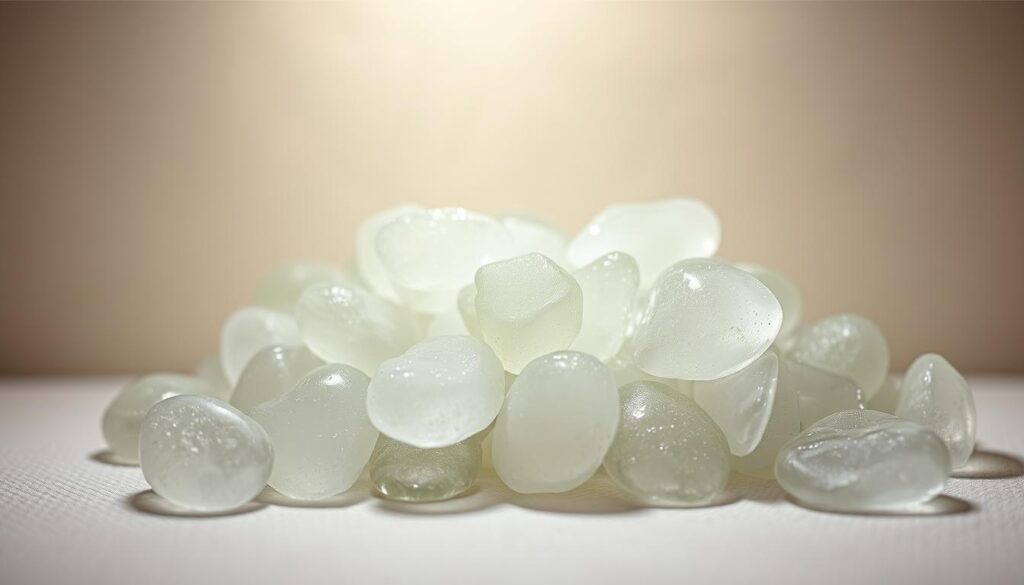
You can identify antique “bubble” pieces by looking for the following features:
- Air bubbles trapped within the glass
- A thick, heavy appearance
- A frosted or weathered exterior
These characteristics not only indicate the age of the sea glass but also contribute to its unique beauty and value among collectors.
Dating Sea Glass Through Color
Understanding the color of sea glass is crucial for collectors who want to date their finds accurately. The diverse colors of sea glass are a result of its history and the processes it underwent before becoming the treasured items they are today.
Common Colors and Their Historical Timeline
Sea glass comes in a variety of colors, each with its own story. Common colors like clear, brown, and green are often associated with everyday glass items from the past century. These colors were prevalent in bottles and other household items, making them common finds on beaches.
For instance, brown glass was widely used for beer and medicine bottles in the late 19th and early 20th centuries. Green glass, on the other hand, was often used for soda and beer bottles during the same period. The presence of these colors can give you a rough estimate of the age of your sea glass.
Rare Colors That Indicate Specific Eras
Some colors of sea glass are rare and highly valued by collectors. Cobalt blue glass, for example, typically dates back to early medicinal and poison bottles from the early 20th century. Red sea glass is another rare find, often originating from automobile tail lights and ship lanterns from the early 1900s.
Black sea glass, which appears deep olive or yellowish green under strong light, is believed to be from thick bottles as early as the 1600s. Lavender sea glass results from clear glass containing manganese that has been exposed to the sun for decades, indicating it was produced before 1920.
These rare colors are not only beautiful but also provide a tangible link to the past. By understanding the historical context of different glass colors, you can better date your sea glass finds and appreciate their unique stories.
Identifying Historical Glass Sources
As you continue your journey as a sea glass collector, understanding the historical sources of your finds can greatly enhance your appreciation for these treasures. The diverse origins of sea glass are a testament to human history and the natural processes that shape our environment.
Bottles and Their Distinctive Shapes
Bottles are one of the most common sources of sea glass. The shapes and sizes of bottles varied over time, reflecting the different uses they were put to. For instance, older bottles tend to have more distinctive shapes and thicker glass. You can identify the age of a piece of sea glass by studying the shape and thickness of the original bottle it came from.
Some common bottle types include:
- Medicine bottles with intricate designs
- Flasks with distinctive flared bases
- Wine and liquor bottles with characteristic shapes
Tableware, Windows, and Other Glass Sources
While bottles are a significant source of sea glass, they are not the only one. Tableware, such as plates and cups, can also become pieces of sea glass over time. Glass from windows, particularly older ones, can be identified by their flat shapes and varying thickness. Decorative items, like vases and art glass, often produce uniquely colored or patterned sea glass.
Industrial glass items and maritime sources, such as ship lights and navigational glass, also contribute to the diverse array of sea glass found on beaches. Understanding these diverse sources helps collectors appreciate the historical context of their finds.
| Source | Characteristics | Age Indicators |
|---|---|---|
| Bottles | Distinctive shapes, thickness | Shape, thickness, color |
| Tableware | Patterned or colored glass | Pattern style, glass quality |
| Windows | Flat shape, varying thickness | Thickness, presence of imperfections |
By examining the characteristics of your sea glass and understanding its potential source, you can gain a deeper appreciation for the history behind each piece you found. This knowledge can also help you identify the era from which your sea glass originates, making each part of your collection even more meaningful.
Markings and Embossing: Windows to the Past
The markings on sea glass can be a window into the past, revealing its history. When you find sea glass on the beach, it may still bear embossed or printed letters and numbers that provide clues about its origins.
Deciphering Letters, Numbers, and Patterns
To understand the significance of these markings, you need to decipher them. Letters and numbers on glass pieces can indicate the manufacturer, the date of production, or even the specific product line. For instance, bottles often had maker’s marks that evolved over time, providing a clue to their age. By researching these markings, you can determine the precise manufacturing dates and locations.
Certain manufacturing techniques left distinctive marks that help date pieces of sea glass. For example, hand-applied markings differ significantly from machine-made ones, serving as an age indicator. Regional glass manufacturers often used unique markings that can help identify the origin of the item.
Using Markings to Determine Age and Origin
By examining the markings on sea glass, you can uncover its history. Patent dates and numbers on glass items provide exact dating information. Online resources and reference books can be invaluable in researching partial markings found on sea glass. Understanding these markings transforms sea glass from mere beach finds to historical artifacts, shedding light on their past.
As you continue to collect and study sea glass, you’ll become more adept at recognizing the significance of these markings, making each piece a valuable part of your collection.
Regional Variations in Sea Glass Aging
The aging process of sea glass is influenced by various regional factors, resulting in distinct characteristics. As you explore different beaches around the world, you’ll notice that the sea glass found in each location has its own unique story to tell.
How Location Affects the Aging Process
The location where sea glass is found plays a crucial role in its aging process. For instance, sea glass from the Mediterranean often exhibits distinctive coloration and aging patterns due to the region’s unique water chemistry. In contrast, sea glass from the Pacific Northwest typically shows different characteristics than East Coast finds, reflecting the diverse marine environments along the United States coastline.
The Caribbean region is another example where sea glass ages differently due to the warm water temperature and coral sand composition. Additionally, sea glass found near historic shipping routes often includes older and more diverse pieces, reflecting the area’s rich maritime history.
Distinctive Characteristics of Sea Glass from Different Shores
Experienced collectors can often identify the region where a piece of sea glass was found based on its characteristics. For example, industrial coastal areas tend to yield different types of sea glass compared to remote beaches. Local glass manufacturing history also influences the types of sea glass found in different regions.
| Region | Distinctive Characteristics |
|---|---|
| Mediterranean | Distinctive coloration, unique aging patterns |
| Pacific Northwest | Differing characteristics from East Coast finds |
| Caribbean | Ages differently due to warm water and coral sand |
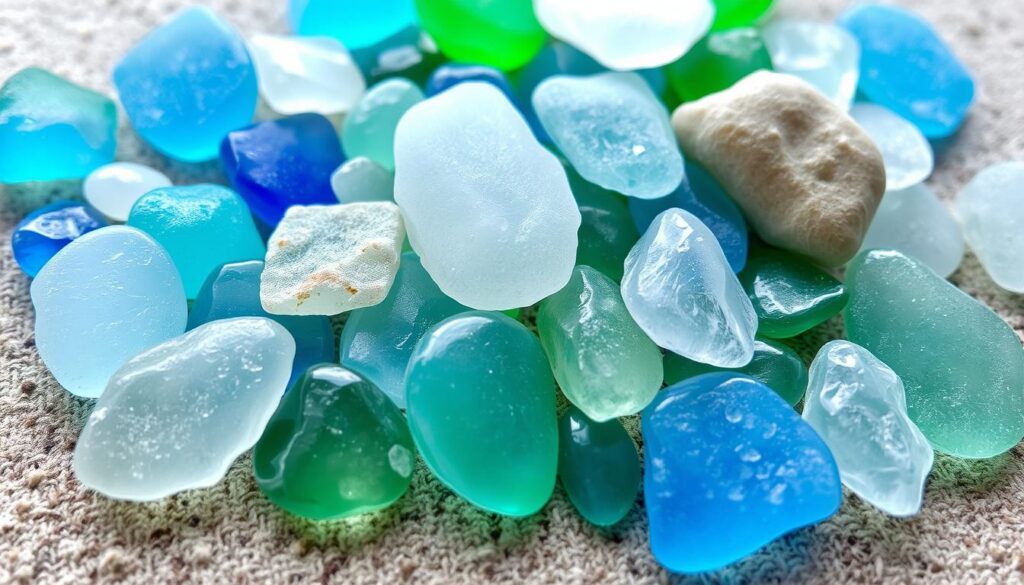
By understanding these regional variations, you can gain a deeper appreciation for the history and stories behind each piece of sea glass you find.
The Rarest Sea Glass Colors and Their Historical Significance
Among the treasures found on beaches, certain colors of sea glass stand out for their exceptional rarity and historical significance. These rare colors not only captivate collectors but also provide a window into the past, revealing the origins and uses of the glass from which they came.
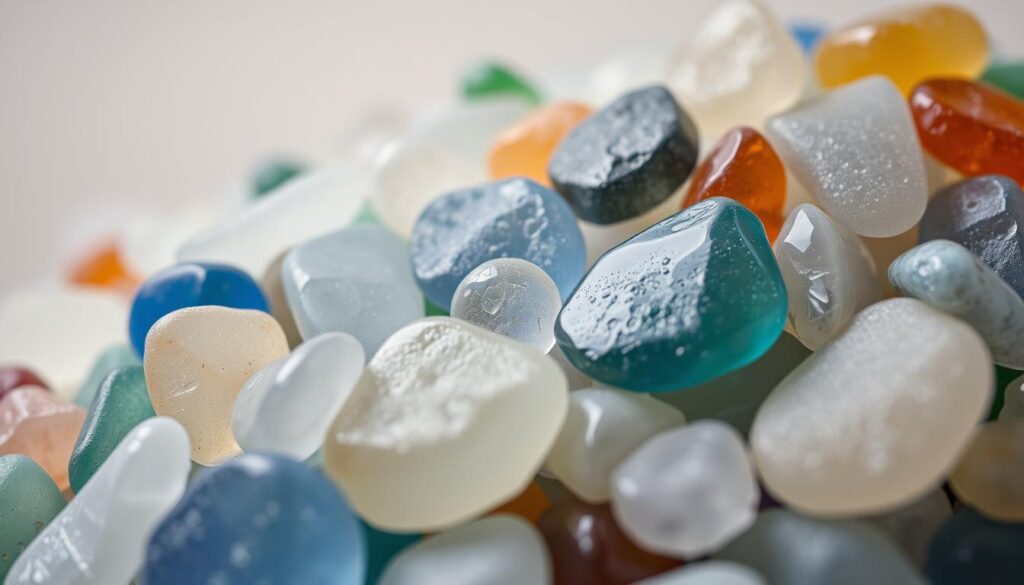
Red and Orange: The Crown Jewels of Sea Glass
Red and orange sea glass pieces are among the most coveted finds. Their vibrant colors are a result of specific manufacturing processes and the materials used. Red sea glass, for instance, often originates from signal glass or automotive taillight glass, which were produced using selenium or cadmium sulfide.
The production of red glass was less common due to the difficulty in achieving the desired shade without the glass becoming too dark or opaque. As a result, red sea glass is particularly rare and valuable.
Purple, Turquoise, and Black: Treasures with Stories
Purple sea glass is deeply regal and suggests luxury and rarity. It often comes from specialty items like ornate bowls or decorative glassware. Neodymium glass, produced in the early 1900s, is another source of purple sea glass, known for its ability to change color under different lighting conditions.
Turquoise sea glass, with its almost electric color, is distinctive and rare. It was created using small amounts of cobalt along with copper or iron, primarily for decorative purposes in art glass, ornate bottles, and window panes.
Black sea glass, often appearing deep olive or yellowish green under strong light, dates back to the 1600s-1800s. It was used for thick liquor bottles and is sometimes called “Pirate Glass” due to its use during the golden age of piracy.
Understanding the historical context and manufacturing techniques behind these colors can enhance your appreciation of these treasures. Using light tests can also help in properly identifying these colors, as they can sometimes appear different than expected.
How to Distinguish Genuine Sea Glass from Artificial Alternatives
Authenticating sea glass is an art that requires a keen eye and a deep understanding of its characteristics. As you continue to explore the world of sea glass, you’ll encounter various techniques to verify the authenticity of your finds.
One of the primary ways to distinguish genuine sea glass from artificial alternatives is by examining its texture and surface features. Genuine sea glass has undergone decades of exposure to the ocean’s forces, resulting in unique characteristics that are difficult to replicate artificially.
The Telltale Signs of Fake Sea Glass
Fake or faux sea glass often lacks the uneven texture that is characteristic of genuine sea glass. Under a microscope or macro lens, genuine sea glass reveals small “c” shaped abrasions caused by years of tumbling in the surf with sand and gravel of various sizes. In contrast, artificial sea glass tends to have a uniform texture due to the use of uniform media in commercial tumbling machines or chemical etching, which leaves no pores.
To identify fake sea glass, look for a lack of surface pitting and uneven texture. You can also perform several tests to verify authenticity, including the “tooth test,” where genuine sea glass feels slightly gritty against the teeth due to its surface pitting.
Texture Tests to Verify Authenticity
Several texture tests can help you verify the authenticity of your sea glass finds.
- Use magnification to identify authentic C-shaped markings on the surface of the glass.
- Rub the glass between your fingers to appreciate its distinctive feel, which is often lacking in artificial glass.
- Perform light tests to reveal the authentic hydration layer in genuine sea glass.
Additionally, examining the color distribution and performing acetone tests can help detect artificial coloring. Experienced collectors develop a tactile sensitivity that aids in identifying authentic pieces. By distinguishing between natural frosting and artificial etching through close examination, you can further verify the authenticity of your sea glass.
The Value of Aged Sea Glass
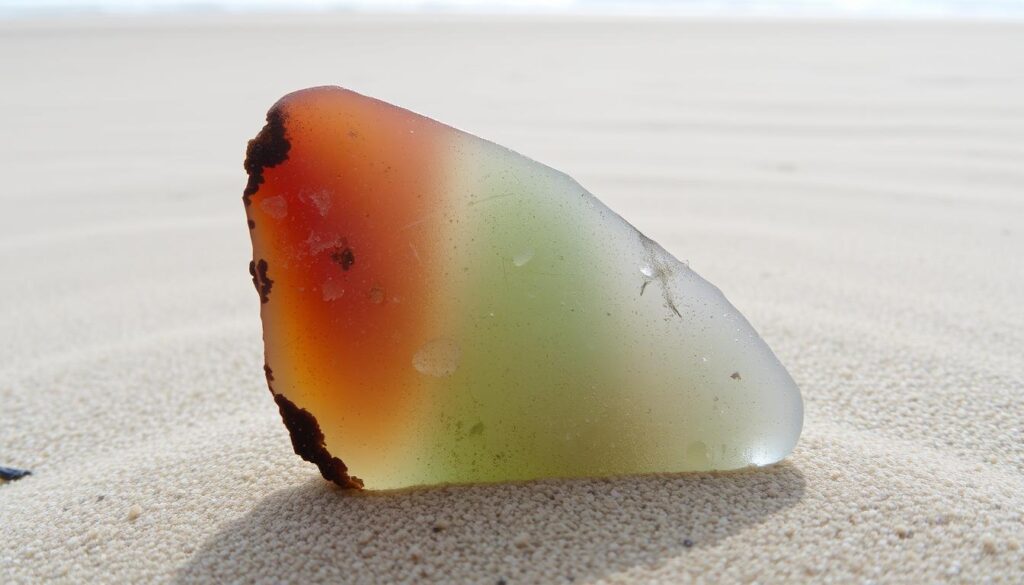
The allure of aged sea glass lies not just in its beauty, but also in its historical significance and the value it holds in the collector’s market. As a treasure found on beaches, aged sea glass tells a story of the past, with each piece bearing the marks of time and weathering.
For collectors, the value of sea glass is deeply intertwined with its age. Older pieces, with their distinctive historical characteristics, command premium prices due to their rarity and the stories they tell.
Factors That Determine Collector Value
Several factors contribute to the value of aged sea glass in the collector’s market. These include the piece’s age, condition, color, and historical provenance. Rare colors, such as red, orange, and lavender, are particularly prized, as are pieces that can be dated to specific historical periods.
- Age and historical significance
- Rarity of color
- Condition and surface texture
- Provenance and documentation
How Age Impacts Worth in the Collector Market
The age of a sea glass piece directly correlates with its value. Older pieces, particularly those from the 18th and 19th centuries, are highly sought after for their historical significance. As the supply of antique sea glass dwindles, the market value of these pieces continues to rise.
Collectors are willing to pay premium prices for verifiably old specimens, especially those with age-related characteristics such as bubbles, thickness, and distinctive colors. Properly documented age can significantly increase a piece’s market worth, making it a valuable addition to any collection.
Tools and Techniques for Examining Sea Glass Age
Sea glass enthusiasts use specific tools and techniques to reveal the age of their finds. To accurately determine the age of a piece of sea glass, one must examine it carefully using various methods.
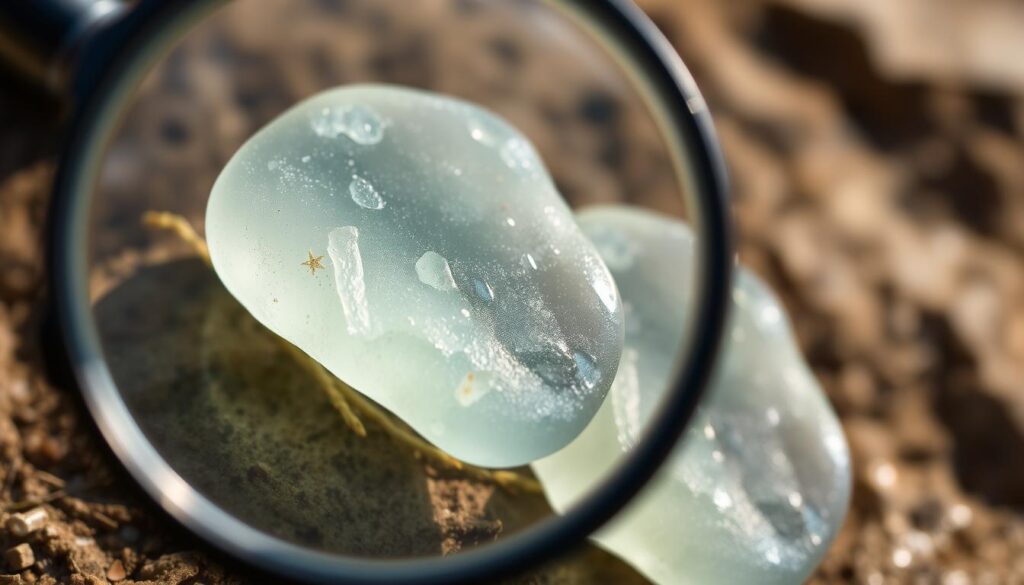
Using Magnification to Spot Age Indicators
Magnification is a crucial tool in examining sea glass. By using a magnifying glass or a microscope, you can spot age indicators such as tiny bubbles, internal swirls, or minute surface textures that are not visible to the naked eye.
This close examination can help you identify characteristics that are indicative of the glass’s age, such as the presence of micro-pitting or the smoothness of the surface.
Light Tests for Examining Internal Characteristics
Light tests are another effective method for examining sea glass. By holding the glass up to different light sources, you can reveal internal characteristics such as bubbles or swirls.
Different light sources, including natural light, LED light, and UV light, can reveal different aspects of the sea glass. For instance, UV light can help identify certain types of glass that fluoresce.
Proper lighting conditions can also help you observe the depth of the hydration layer in genuine pieces and enhance the visibility of faint markings or embossing.
Building a Collection Based on Historical Periods
Creating a timeline of your sea glass discoveries can be a rewarding way to appreciate their historical significance. As you curate your collection, you can gain insights into the evolution of glassmaking techniques and the historical contexts in which your pieces were created.
Organizing Sea Glass by Estimated Age
To organize your sea glass by estimated age, start by identifying the characteristics of each piece, such as color, texture, and thickness. You can then group similar pieces together, creating a visual representation of the different eras from which they originate. For example, older pieces tend to be thicker and have more pronounced pitting, while newer pieces are often smoother and more uniform in color.
| Era | Characteristics | Typical Colors |
|---|---|---|
| Pre-1900s | Thick, heavily pitted | Clear, aqua, brown |
| Early 20th century | Moderate thickness, some pitting | Cobalt blue, green, amber |
| Mid-20th century | Thinner, less pitting | Colorless, pale blue, pink |
Creating a Timeline Display of Your Finds
A timeline display can bring your sea glass collection to life, showcasing the progression of glassmaking techniques and styles over time. To create a visually appealing display, consider organizing your pieces chronologically and incorporating historical photographs or documents to provide context. You can also use labels and documentation to highlight the unique characteristics of each piece and its place in the timeline. For more information on dating glass bottles, you can visit https://www.truelegacyhomes.com/age-glass-bottles/.
Preserving the History and Stories of Your Sea Glass
Preserving the history behind your sea glass finds is crucial for understanding their significance. To achieve this, consider maintaining a sea glass journal to record the location, date, and observations of each piece you find. Photographing and cataloging your pieces can also help preserve their historical context.
Researching local history can provide valuable insights into the potential origins of your sea glass found. Sharing the story behind your glass can connect you to coastal communities and their histories. Digital tools can aid in preserving and sharing these stories, enhancing the value of your collection.
- Document the provenance of your sea glass
- Create a catalog of your pieces with detailed descriptions
- Share your findings with the collector community
By doing so, you’ll not only preserve the history of your glass but also contribute to a broader understanding of maritime history and material culture.
Conclusion
Sea glass, with its unique shapes, textures, and colors, offers a tangible connection to the past. As you’ve explored the various factors that determine the age of sea glass, including shape, texture, frosting, thickness, and color, you’ve gained a deeper understanding of these treasures found along the shore.
Understanding these characteristics not only enhances your collecting experience but also adds a rich historical context to your finds. Sea glass represents a fascinating intersection of human history and natural processes, shaped by the sea over time. As pollution controls and recycling continue to reduce the sources of new sea glass, genuine pieces become increasingly valuable.
The journey of sea glass from discarded item to beach treasure mirrors larger environmental narratives, highlighting the impact of human activities on our oceans. By collecting sea glass, you’re connecting with both maritime history and the natural world. It’s essential to practice responsible collecting, respecting beach environments and preserving the stories these pieces tell.
- View your sea glass finds as historical artifacts with stories to tell, rather than just pretty objects.
- Appreciate the journey and significance of each piece, enhancing your joy in collecting.
- Recognize that the value of sea glass lies not just in its rarity but in its historical significance and the tales it tells.
As you continue your journey as a sea glass collector, remember that each piece you find is a window into the past, a testament to the enduring legacy of human activity and the relentless shaping force of the sea. By understanding and appreciating these aspects, you’ll deepen your connection to the treasures you discover on your way along the beach.