
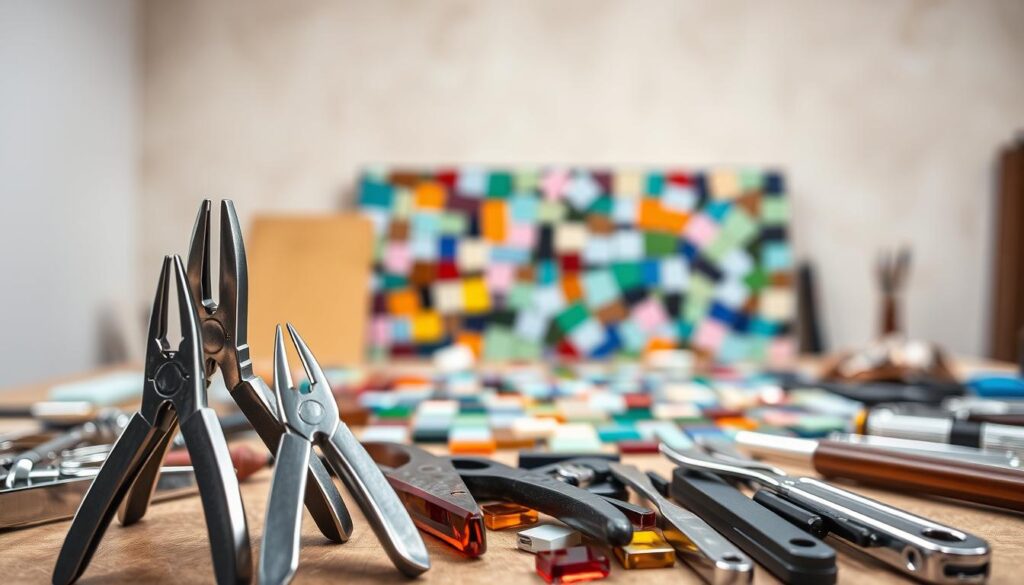
Mosaic art has captivated creators for over 4,000 years. This timeless craft involves arranging small, colorful pieces into stunning designs. Today, modern techniques blend glass, ceramics, and other vibrant materials to bring ideas to life.
Much like solving a puzzle, mosaic projects require patience and precision. The joy comes from transforming fragments into a cohesive masterpiece. Whether for home decor or personal expression, the results are always rewarding.
Having the right supplies makes the process smoother. From cutting tools to adhesives, each item plays a crucial role. Explore the basics, and soon, your creative vision will take shape.
Ready to dive in? Learn more about mosaic craft techniques to refine your skills.
Introduction to Glass Mosaic Art
The tradition of assembling colorful glass pieces spans cultures and eras. This art form transforms tiny fragments into intricate designs, blending creativity with patience. From Byzantine churches to contemporary wall decor, mosaics have evolved over thousands of years.
Modern projects incorporate vibrant hues and textures, adapting to any style. Beginners can explore starter kits, which include pre-cut pieces and easy-to-follow patterns. Color theory plays a key role—contrasting shades add depth, while monochromatic layouts create harmony.
| Historical Mosaics | Modern Adaptations |
|---|---|
| Used natural stone and ceramics | Relies on stained glass and smalti |
| Featured religious or royal themes | Includes abstract and personalized designs |
| Labor-intensive hand-cutting | Pre-cut tiles and grinders streamline work |
Safety is critical when handling glass. Always wear gloves and eye protection. For inspiration, learn how to create a sea glass mosaic using beginner-friendly techniques.
Tools You Need to Get Started with Glass Mosaic Art: A Beginner’s Kit
Quality materials form the foundation of every stunning mosaic creation. Whether you’re crafting a small decorative piece or a large wall installation, the right supplies ensure durability and ease of use. Let’s explore the essentials for your first project.
Starter Kits: Everything in One Package
Pre-assembled kits simplify the process with pre-cut pieces, adhesive, and patterns. They’re ideal for beginners learning color coordination and spacing. Brands like Skeew include backer boards and safety gear, saving you time on research.
Basic Supplies: Glue, Grout, and Backer Boards
Wellbond glue offers a strong bond for glass tiles without yellowing over time. For grout, consider these options:
| Grout Type | Best For |
|---|---|
| Sanded | Wider gaps (1/8″ or more) |
| Unsanded | Delicate pieces and thin lines |
| Epoxy | Water-resistant finishes |
Skeew’s cement-based boards provide stability for heavy mosaics. Always opt for non-toxic materials, especially for indoor displays. Proper supplies turn fragile fragments into lasting art.
Must-Have Safety Equipment
Sharp fragments and fine dust demand protective equipment for safe crafting. Without the right gear, tiny glass shards or grout particles can cause injuries or respiratory issues. Prioritizing safety ensures your creative process stays enjoyable and risk-free.
Safety Glasses: Protecting Your Eyes
Flying debris is a common hazard when cutting or shaping materials. Wraparound safety glasses with side shields offer full coverage. Polycarbonate lenses are scratch-resistant and ideal for long sessions.
Dust Masks and Gloves: Handling Materials Safely
Inhaling grout or glass dust can irritate lungs. NIOSH-approved N95 masks filter 95% of airborne particles. For gloves, consider these options:
- Nitrile gloves: Chemical-resistant and flexible for precise work.
- Cotton gloves with grips: Protect against cuts without sacrificing dexterity.
Always work in a well-ventilated area. Open windows or use a fan to disperse dust. These supplies aren’t just precautions—they’re essentials for sustainable artistry.
Essential Tools for Cutting and Shaping Glass
Precision cutting transforms raw materials into art. The right tools ensure clean lines and safe handling. From scoring to breaking, each step requires specialized supplies for flawless results.

Glass Cutters: Types and Techniques
Carbide-wheel cutters score glass smoothly without chipping. Oil-fed models reduce friction, extending blade life. For curves, pistol-grip designs offer better control. Always score once—repeated passes weaken the line.
Running Pliers and Grozing Pliers: Breaking with Precision
Running pliers apply even pressure along scored lines for clean breaks. Grozing pliers nip small edges or adjust shapes. Both feature padded jaws to prevent cracks. Keep them dry to avoid rust.
Waffle Grids: Keeping Your Workspace Clean
These textured mats catch shards, speeding up cleanup. Silicone grids last longer than plastic and resist stains. For DIY options, try a baking sheet with raised edges. Organizing fragments saves time and boosts focus.
- Clean grids weekly to prevent debris buildup.
- Label sections by color or size for quick access.
- Use a handheld vacuum for fine dust removal.
Grinding and Finishing Tools
Smooth edges and polished finishes elevate any mosaic project. The right supplies ensure safe handling and professional results. From coarse grinding to delicate touch-ups, each step refines your stained glass masterpiece.
Glass Grinders: Smoothing Edges
Electric grinders remove sharp edges efficiently. Diamond-coated bits glide through stained glass, reducing chipping. Models like Inland Craft offer adjustable speeds for control.
Grinder Bits and Accessories
Bit size impacts precision. Common options include:
- 1/4″ bits: Ideal for general shaping.
- 1/8″ bits: Perfect for intricate details.
- Rubber finger guards: Protect skin during close work.
| Bit Type | Best Use | Replacement Frequency |
|---|---|---|
| Diamond-coated | Daily projects | Every 6 months |
| Silicon carbide | Heavy-duty grinding | Every 3 months |
Extend bit life by rinsing after use. Splash guards keep water containment tidy. Pair these items with a well-lit workspace for optimal results.
Design and Planning Tools
Strategic planning tools help bring mosaic visions to life. Thoughtful preparation ensures colors harmonize and pieces fit perfectly. These resources transform rough ideas into polished designs.
Pattern-Making Supplies
Backer boards serve as testing canvases before final placement. Sketch designs with washable markers for easy adjustments. Consider these essentials:
- Color wheels identify complementary shades
- Tracing paper transfers patterns accurately
- Grid paper maintains proportional spacing
Color Selection and Layout Tips
Warm tones (reds, oranges) create energy, while cool hues (blues, greens) soothe. For contrast, pair light and dark colors. This technique adds depth to any composition.
Leave 1/8-inch gaps between pieces for grout lines. Photograph layouts from multiple angles to spot imbalances. These tips help refine designs before permanent placement.
Remember: color psychology influences mood. Vibrant reds excite, while soft blues relax. Choose palettes that match your artwork’s emotional intent.
Where to Learn Glass Mosaic Art
Learning glass mosaic techniques opens doors to vibrant creativity. Whether through hands-on classes or digital tutorials, resources abound for beginners. Dive into local workshops, online courses, or collaborative community spaces to refine your craft.
Local Classes and Workshops
Many art centers and craft stores offer in-person sessions. Instructors guide you through cutting, arranging, and grouting projects. Bunnings Workshop provides project advice, ideal for troubleshooting common challenges.
Online Courses for Beginners
Platforms like Skillshare host step-by-step video tutorials. A dedicated blog or forum often supplements lessons, offering tips for intricate designs. These flexible options fit busy schedules.
Community Resources and Studios
Shared studio spaces provide tools like grinders and cutters for member use. Etiquette tips for collaborative spaces:
- Clean tools after use.
- Reserve equipment in advance.
- Share inspiration in social media groups.
Explore beginner-friendly techniques to accelerate your progress. The right community fuels both skill and motivation.
Conclusion
Creating with fragments unlocks endless artistic potential. With the right supplies, even beginners can craft stunning home decor or personalized gifts. Starter kits simplify the process, letting you get started without overwhelm.
Each small project builds confidence. As skills grow, so do possibilities—from wall murals to intricate tabletops. Remember, safety gear isn’t restrictive; it empowers creativity by reducing risks.
Abhay Kumar once said, “The joy of creation is the joy of the soul.” Share your first mosaic online to inspire others. Every piece tells a story—what will yours say?