
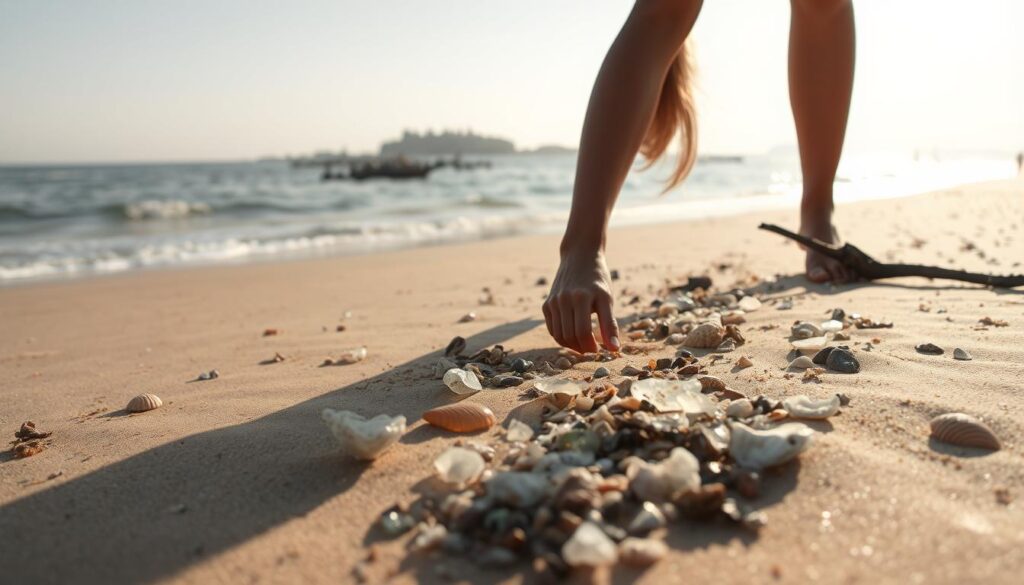
Imagine strolling along a pristine beach, the sound of waves gently lapping at the shore, as you scan the sand for hidden treasures. For many, the thrill of the hunt is a big part of the fun, and few activities offer as much excitement as sea glass hunting. This comprehensive guide will introduce you to the fascinating world of sea glass, where discarded fragments of glass are transformed into beautiful, ocean-tumbled gems.
As you explore the shores, you’ll uncover the story behind sea glass, a true ‘trash to treasure’ tale. The process of creating these gems can take anywhere from 10 to 100 years, as the relentless sea wears down the glass, giving it a frosty, lightly pitted appearance. Whether you’re a seasoned collector or new to beachcombing, this guide will help you plan your next adventure at America’s most productive beaches.
What Is Sea Glass and Why People Hunt for It
For many beachcombers, discovering a piece of sea glass is a thrilling experience that sparks curiosity and imagination. You might wonder about the history behind each smooth, weathered fragment and the stories it could tell.
The Transformation from Trash to Treasure
Sea glass begins as discarded trash, often from old bottles or windows, which is then weathered and transformed by the ocean’s forces into beautiful, frosted glass. This natural process can take years, even decades, to produce the characteristic smooth edges and soft colors that sea glass collectors covet.
The Appeal of Sea Glass Collecting
The appeal of collecting sea glass lies in its connection to both history and nature. You can appreciate the wide variety of colors and shapes, as well as the potential historical significance of each find. Many collectors enjoy the meditative quality of walking along a beach, searching for these hidden treasures. As you collect pieces of sea glass, you might turn them into jewelry, art, or home décor, adding personal meaning to beautiful objects.
How Sea Glass Forms
The formation of sea glass is a fascinating process that involves the transformation of discarded glass into a treasured collector’s item. This process occurs over many years, often decades, and is influenced by the environment in which the glass is weathered.
The transformation begins when glass is discarded into the ocean or sea. Over time, the glass is tumbled and smoothed by the constant motion of the water and waves. This natural tumbling process is crucial in shaping the glass into the frosted, smooth pieces that collectors covet.
The Natural Tumbling Process
The natural tumbling process is a key factor in the formation of sea glass. As glass fragments are tossed about by waves, they collide with other objects such as rocks and shells, gradually wearing down their edges and surfaces. This process not only smooths the glass but also gives it a characteristic frosted appearance due to the chemical interaction with saltwater.
Sea Glass vs. Beach Glass: Understanding the Difference
While often used interchangeably, “sea glass” and “beach glass” refer to glass found in different environments. Sea glass is specifically found on saltwater beaches, where the saltwater contributes to its distinctive frosting. In contrast, beach glass can be found on both freshwater and saltwater beaches, and may have a slightly different appearance. For example, Lake Erie is known for producing high-quality beach glass due to its unique water chemistry.
Best Beaches in the U.S. for Sea Glass Hunting
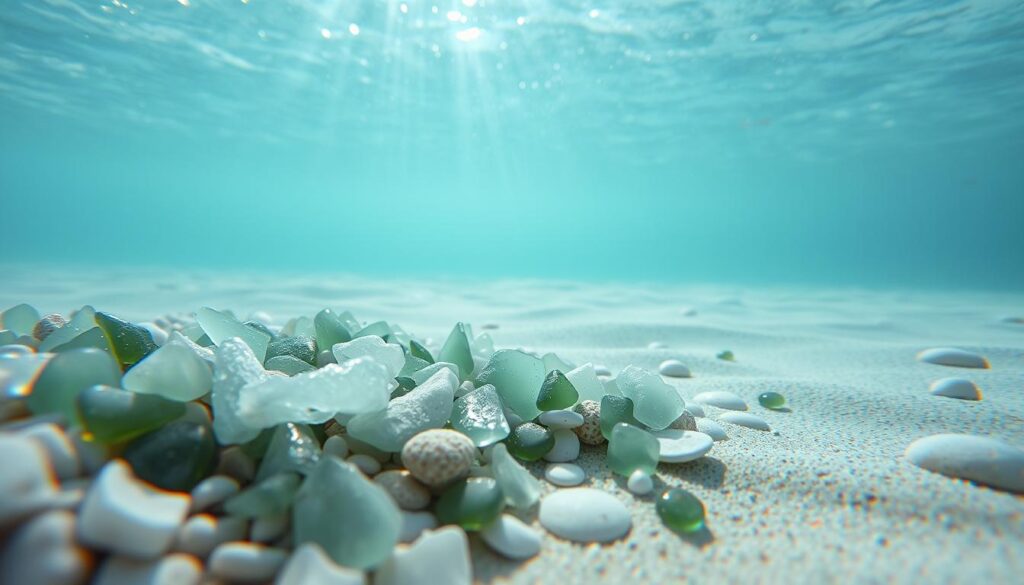
If you’re on the hunt for sea glass, the U.S. coastline has some fantastic spots to explore. From the Pacific Coast to the Great Lakes, numerous beaches are renowned for their abundance of glass treasures.
Glass Beach, Fort Bragg, California
Glass Beach in Fort Bragg, California, is a must-visit destination for any serious sea glass collector. The beach is known for its smooth, frosted glass pieces that have been tumbled by the ocean’s waves.

Davenport Beach, California
Davenport Beach, located near Santa Cruz, California, is another hotspot for sea glass enthusiasts. The beach’s unique geography and the action of the Pacific Ocean create an ideal environment for glass to be transformed into beautiful, smooth pieces.

Glass Beach, Port Townsend, Washington
On the Olympic Peninsula in Washington State, Glass Beach in Port Townsend is a favorite among collectors. The beach is accessible and offers a variety of sea glass pieces, thanks to the area’s history and the natural tumbling process.

Headlands Beach State Park, Mentor, Ohio
For those in the Midwest, Headlands Beach State Park along Lake Erie is a gem. The park’s beaches are known for their sea glass, which is often uncovered by the lake’s waves and storms.

Hamburg Beach, New York
Hamburg Beach, situated on Lake Erie’s New York shoreline, has gained a reputation as one of the most productive beach glass hunting locations in the Great Lakes region. The unique properties of Lake Erie contribute to the creation of well-frosted glass pieces.

East Coast Sea Glass Hunting Spots
For those seeking sea glass, the East Coast provides a rich tapestry of hunting grounds. The coastline from Maine to Florida is dotted with numerous beaches that are perfect for beachcombing and discovering unique pieces of glass.
Monhegan Island, Maine
Monhegan Island, off the coast of Maine, is a haven for sea glass enthusiasts. The island’s rugged shoreline and historical significance make it an ideal location for finding a variety of glass pieces.
Other Notable East Coast Beaches
Beyond Monhegan Island, the East Coast offers many other productive beaches for sea glass hunting. Beaches along the Chesapeake Bay in Maryland and Virginia are known for their abundant sea glass, thanks to the bay’s long maritime history. New Jersey’s coastline, particularly around Cape May and along Delaware Bay, is also renowned for its glass finds.

How to Identify Quality Sea Glass
When searching for sea glass, identifying quality pieces is crucial to building a valuable collection. Quality sea glass is characterized by its unique appearance and texture, which are shaped by its history and exposure to the elements.
Characteristics of Well-Formed Sea Glass
Well-formed sea glass typically has a smooth, frosted appearance that is the result of years of exposure to saltwater and the elements. The frosting on sea glass is a key characteristic that collectors look for, as it indicates the glass’s age and history.
Evaluating Frosting and Texture
The frosting on sea glass results from a chemical process called hydration, where minerals in the glass leach out through exposure to salt water. To evaluate the frosting, look for an even, consistent texture across the entire surface that doesn’t wash off or change when wet. Quality frosting creates a textured surface with microscopic pitting that catches light and creates a subtle sparkle when held in the sun.
- The depth of frosting indicates the glass’s age, with deeper frosting suggesting longer exposure to sea conditions.
- Authentic sea glass texture should feel slightly rough to the touch, similar to fine sandpaper.
Sea Glass Colors and Their Rarity
One of the most fascinating aspects of sea glass is the range of colors it comes in, from common to extremely rare. The color of a sea glass piece is a significant factor in its appeal and value.
The most frequently found colors are green, brown, and clear. These colors are considered common because they originated from a wide range of sources, including bottles and other household items that were commonly discarded.
Common Colors: Green, Brown, and Clear
Green sea glass, often from old bottles, is one of the most common colors found. Brown and clear pieces are also abundant, having originated from various types of glassware and bottles.
Uncommon Colors: Aqua, Cobalt Blue, and Amber
Aqua, cobalt blue, and amber sea glass pieces are less common and thus more prized by collectors. Aqua glass often comes from older glass containers, while cobalt blue glass was used in certain types of bottles and jars. Amber glass, though less frequent, adds a warm touch to any collection.
Rare Colors: Red, Orange, and Yellow
The rarest sea glass colors are red, orange, and yellow. Only one in five thousand pieces collected is red, often having come from ship lanterns, streetlamps, and car tail lights. Orange and yellow pieces are even more scarce, with approximately one in ten thousand pieces collected. These rare colors are highly valued among collectors.
| Color | Rarity | Origin |
|---|---|---|
| Red | 1 in 5,000 | Ship lanterns, streetlamps, car tail lights |
| Orange | 1 in 10,000 | Decorative glass, medicine bottles, art glass |
| Yellow | 1 in 10,000 | Tableware, decorative glass, industrial applications |

Understanding the rarity and origins of different sea glass colors can enhance your collecting experience and appreciation for these treasures.
Best Times and Conditions for Sea Glass Hunting
To maximize your chances of finding sea glass, it’s crucial to consider the best times and conditions for hunting. The ocean’s tides and seasonal changes play significant roles in uncovering and depositing sea glass on beaches.
Tidal Considerations
The tide is a critical factor in sea glass hunting. Low tide often exposes more beach area, increasing the likelihood of finding sea glass. However, be mindful of the tide times to avoid getting caught. As the saying goes, “that tide is not going to wait!”
Plan your hunt accordingly, and don’t be tempted to stay out longer than is sensible. When it’s time to head back, get moving to avoid any potential dangers.
Seasonal Factors
The time of year significantly impacts sea glass hunting. Here’s a breakdown of what you can expect during different seasons:
- Winter: Often provides the best conditions due to stronger storms that churn up the ocean floor.
- Spring: Can be productive as winter debris settles, but expect more crowds.
- Summer: Offers longer days and warmer weather but comes with more competition.
- Fall: Brings increasing storm activity, refreshing beach deposits with fewer crowds.
Early morning is generally the best time of day, year-round, for spotting sea glass before other collectors arrive.
| Season | Conditions | Crowd Level |
|---|---|---|
| Winter | Strong storms, fresh deposits | Low |
| Spring | Settling debris | Moderate |
| Summer | Longer days, warmer | High |
| Fall | Increasing storms, refreshed deposits | Moderate |
Essential Gear for Sea Glass Hunting
The right equipment is vital for an enjoyable and fruitful sea glass hunting experience. Having the right gear can make a significant difference in your ability to find and collect quality pieces.
What to Wear
When preparing for a sea glass hunting adventure, consider wearing comfortable clothing and shoes suitable for walking on the beach. A lightweight backpack is also recommended to carry your finds and other essentials comfortably. Don’t forget to stay hydrated, especially during long hikes or in warm weather.
Tools and Equipment
To enhance your glass collecting experience, consider bringing a few essential tools. A small mesh bag or container with drainage holes is useful for collecting and rinsing sea glass while keeping it separate from other beach finds. Small garden tools like hand rakes or scoops can help sift through gravel and pebbles where sea glass often hides. Additionally, a water bottle is not only essential for hydration but also for rinsing pieces to better identify quality glass.
- A lightweight backpack to distribute the weight of your finds comfortably.
- Small garden tools like hand rakes or scoops to sift through gravel and pebbles.
- A water bottle for hydration and rinsing pieces.
- A small notebook or smartphone app to record information about your finds.
Ethical Sea Glass Collecting Practices
Sea glass collecting can be a fun and rewarding hobby, but it requires a thoughtful approach to ensure it remains sustainable. As you enjoy this activity, you’re not just hunting for treasure; you’re also representing a community that values conservation.
To maintain the delicate balance between enjoying your hobby and preserving the environment, consider the following conservation aspects.
Conservation Considerations
Removing large quantities of sea glass is discouraged, as it can deplete the beach of its natural treasures. Many popular sea glass beaches have specific regulations regarding collection.
- Research local regulations before you start collecting to avoid any unintended violations.
- Be aware that state parks, national seashores, and other protected areas often have strict rules against removing any natural materials.
Respecting Beach Regulations
Before you begin your sea glass hunt, it’s crucial to understand the rules that govern the beach you’re visiting.
- Check for posted signs or guidelines from park authorities to ensure you’re complying with local rules.
- Remember that private beaches may have different rules than public ones, so always obtain permission before collecting on private property.
- When in doubt, adopt the “take only photographs, leave only footprints” approach to avoid violating any conservation efforts.
Conclusion: Planning Your Sea Glass Adventure
The world of sea glass hunting is as much about the journey as it is about the treasures you find along the way. As you plan your adventure, consider combining research, timing, and preparation to maximize your chances of discovering beautiful glass treasures.
Exploring historic maritime communities like Port Townsend can enrich your experience. This charming town offers not only access to productive sea glass beaches but also a glimpse into the area’s rich history and cultural heritage.
As you embark on your sea glass hunting journey, remember that the experience is meditative, connecting you with the ocean’s rhythms and the stories of human life reflected in each piece of transformed glass. Whether you’re visiting beaches in a new world or exploring local shores, the pursuit of these ocean treasures is a unique adventure.